Buy future-mobility.eu ?
We are moving the project
future-mobility.eu .
Are you interested in purchasing the domain
future-mobility.eu ?
domain@kv-gmbh.de · 0541-91531010
Buy future-mobility.eu ?
How will future mobility be influenced?
Future mobility will be influenced by advancements in technology, such as the development of autonomous vehicles and electric cars. These innovations will lead to more efficient and sustainable transportation options. Additionally, the integration of smart city infrastructure and the rise of shared mobility services will also play a significant role in shaping the future of mobility. Overall, future mobility will be characterized by increased connectivity, reduced environmental impact, and a shift towards more convenient and flexible transportation solutions. **
What is the difference between social change and social mobility?
Social change refers to the transformation of societal norms, values, and structures over time, leading to a shift in the overall functioning of a society. This can include changes in laws, policies, cultural practices, and attitudes. Social mobility, on the other hand, refers to the movement of individuals or groups within the social hierarchy, typically in terms of their socioeconomic status. Social mobility can be upward, downward, or horizontal, and it is often influenced by factors such as education, occupation, and income. In essence, social change is about broader shifts in society, while social mobility is about the movement of individuals within that society. **

Similar search terms for Difference
Top-Angebote
Products related to Difference:
-
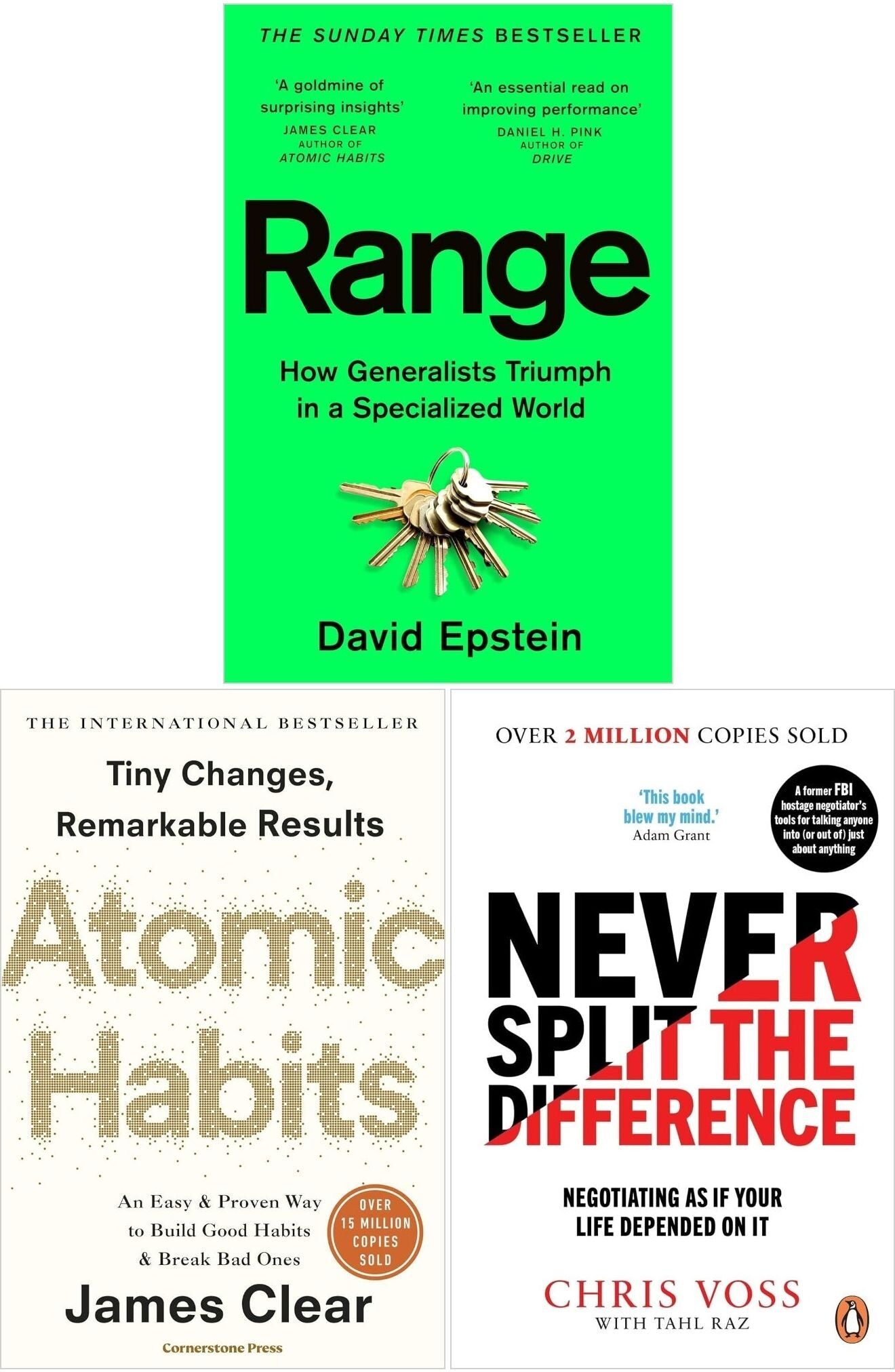
Penguin Range, Never Split the Difference and Atomic Habits 3 Books SetRange In this landmark book, David Epstein shows you that the way to succeed is by sampling widely, gaining a breadth of experiences, taking detours, experimenting relentlessly, juggling many interests – in other words, by developing range. Studying the world's most successful athletes, artists, musicians, inventors and scientists, Epstein demonstrates why in most fields – especially those that are complex and unpredictable – generalists, not specialists are primed to excel. No matter what you do, where you are in life, whether you are a teacher, student, scientist, business analyst, parent, job hunter, retiree, you will see the world differently after you've read Range. You'll understand better how we solve problems, how we learn and how we succeed. You'll see why failing a test is the best way to learn and why frequent quitters end up with the most fulfilling careers. Never Split the Difference After a stint policing the rough streets of Kansas City, Missouri, Chris Voss joined the FBI, where his career as a kidnapping negotiator brought him face-to-face with bank robbers, gang leaders and terrorists. Never Split the Difference takes you inside his world of high-stakes negotiations, revealing the nine key principles that helped Voss and his colleagues succeed when it mattered the most - when people's lives were at stake. Rooted in the real-life experiences of an intelligence professional at the top of his game, Never Split the Difference will give you the competitive edge in any discussion. Atomic Habits Transform your life with tiny changes in behaviour, starting now. People think that when you want to change your life, you need to think big. But world-renowned habits expert James Clear has discovered another way. He knows that real change comes from the compound effect of hundreds of small decisions: doing two push-ups a day, waking up five minutes early, or holding a single short phone call. He calls them atomic habits. In this ground-breaking book, Clears reveals exactly how these minuscule changes can grow into such life-altering outcomes.14,99 £*Shipping: 2,99 £Secure redirect to the provider
-
Penguin Never Split the Difference: Negotiating as if Your Life Depended on ItA former FBI hostage negotiator offers a new, field-tested approach to - effective in any situation.'Riveting' Adam Grant'Stupendous' The Week'Brilliant' GuardianAfter a stint policing the rough streets of Kansas City, Missouri, Chris Voss joined the FBI, where his career as a kidnapping negotiator brought him face-to-face with bank robbers, gang leaders and terrorists. Never Split the Difference takes you inside his world of high-stakes negotiations, revealing the nine key principles that helped Voss and his colleagues succeed when it mattered the most - when people's lives were at stake.Rooted in the real-life experiences of an intelligence professional at the top of his game, Never Split the Difference will give you the competitive edge in any discussion. PRAISE FOR NEVER SPLIT THE DIFFERENCE'My pick for book of the year.' Forbes'Who better to learn [negotiation] from than Chris Voss, whose skills have saved lives and averted disaster?' Daily Mail'Filled with insights that apply to everyday negotiations.' Business Insider'It's rare that a book is so gripping and entertaining while still being actionable and applicable.' Inc.'A business book you won't be able to put down.' Fortune7,99 £*Shipping: 2,99 £Secure redirect to the provider



-
Will bicycles be the mobility of the future?
Bicycles have the potential to be a significant part of the future of mobility. With increasing concerns about environmental sustainability and the need for more efficient and healthy modes of transportation, bicycles offer a promising solution. Cities around the world are investing in bike infrastructure and promoting cycling as a viable means of transportation. Additionally, the rise of electric bicycles and advancements in bike-sharing programs are making cycling more accessible and convenient. While bicycles may not be the sole solution to future mobility, they are likely to play a significant role in creating more sustainable and efficient transportation systems. **
-
What will mobility of the future look like?
The mobility of the future is expected to be more sustainable, connected, and autonomous. Electric vehicles will become more prevalent, reducing emissions and reliance on fossil fuels. Transportation systems will be interconnected, allowing for seamless travel between different modes of transportation. Autonomous vehicles will also play a significant role, offering safer and more efficient transportation options. Overall, the future of mobility will prioritize sustainability, efficiency, and convenience. **
-
How do electric motors work in electric mobility with cars?
Electric motors in electric cars work by converting electrical energy from the battery into mechanical energy to drive the vehicle. When the driver accelerates, the electric motor receives power from the battery and generates torque to propel the car forward. This process is more efficient than traditional internal combustion engines, as electric motors have fewer moving parts and can deliver power instantly. Additionally, electric motors can also act as generators during braking, converting kinetic energy back into electrical energy to recharge the battery, a process known as regenerative braking. **
-
What are some brainstorming ideas for electric mobility?
Some brainstorming ideas for electric mobility could include developing more efficient battery technology to increase the range of electric vehicles, creating a network of fast-charging stations to alleviate range anxiety, implementing incentives for consumers to switch to electric vehicles such as tax breaks or rebates, and investing in infrastructure improvements to support the widespread adoption of electric vehicles. Additionally, exploring the use of renewable energy sources to power electric vehicles and integrating smart technology to optimize charging times and energy usage could also be beneficial brainstorming ideas for electric mobility. **


What is the progress of electric mobility internationally?
Electric mobility has been making significant progress internationally, with many countries and cities implementing policies and incentives to promote the adoption of electric vehicles. Several major automakers have also committed to transitioning to electric vehicle production, and the infrastructure for electric vehicle charging is expanding rapidly. Additionally, there has been a growing focus on developing more sustainable and efficient battery technology to further support the growth of electric mobility. Overall, the international progress of electric mobility is promising, with increasing awareness and investment in this cleaner and more sustainable mode of transportation. **
How will the mobility of the future look like?
The mobility of the future is likely to be characterized by a shift towards electric and autonomous vehicles. Electric vehicles will become more prevalent as the technology improves and the infrastructure for charging stations expands. Autonomous vehicles will also play a significant role, offering a more efficient and safer mode of transportation. Additionally, there will be a greater emphasis on shared mobility services, reducing the need for individual car ownership and promoting a more sustainable and flexible transportation system. Overall, the future of mobility will be more connected, efficient, and environmentally friendly. **
Top-Angebote
Products related to Difference:
-
Thirstystone Make a Difference 4 Pack Tumbled Tile CoasterABSORBENT STONE-Coasters arrive as a set of 4 Coasters. Each Coaster is constructed of absorbent stone that continuously absorbs drips and condensation from your beverages while preventing stains and rings on your furniture.29,99 $*Shipping: 0,00 $Secure redirect to the provider
-
Penguin Range, Never Split the Difference and Atomic Habits 3 Books SetRange In this landmark book, David Epstein shows you that the way to succeed is by sampling widely, gaining a breadth of experiences, taking detours, experimenting relentlessly, juggling many interests – in other words, by developing range. Studying the world's most successful athletes, artists, musicians, inventors and scientists, Epstein demonstrates why in most fields – especially those that are complex and unpredictable – generalists, not specialists are primed to excel. No matter what you do, where you are in life, whether you are a teacher, student, scientist, business analyst, parent, job hunter, retiree, you will see the world differently after you've read Range. You'll understand better how we solve problems, how we learn and how we succeed. You'll see why failing a test is the best way to learn and why frequent quitters end up with the most fulfilling careers. Never Split the Difference After a stint policing the rough streets of Kansas City, Missouri, Chris Voss joined the FBI, where his career as a kidnapping negotiator brought him face-to-face with bank robbers, gang leaders and terrorists. Never Split the Difference takes you inside his world of high-stakes negotiations, revealing the nine key principles that helped Voss and his colleagues succeed when it mattered the most - when people's lives were at stake. Rooted in the real-life experiences of an intelligence professional at the top of his game, Never Split the Difference will give you the competitive edge in any discussion. Atomic Habits Transform your life with tiny changes in behaviour, starting now. People think that when you want to change your life, you need to think big. But world-renowned habits expert James Clear has discovered another way. He knows that real change comes from the compound effect of hundreds of small decisions: doing two push-ups a day, waking up five minutes early, or holding a single short phone call. He calls them atomic habits. In this ground-breaking book, Clears reveals exactly how these minuscule changes can grow into such life-altering outcomes.14,99 £*Shipping: 2,99 £Secure redirect to the provider
-
How will future mobility be influenced?
Future mobility will be influenced by advancements in technology, such as the development of autonomous vehicles and electric cars. These innovations will lead to more efficient and sustainable transportation options. Additionally, the integration of smart city infrastructure and the rise of shared mobility services will also play a significant role in shaping the future of mobility. Overall, future mobility will be characterized by increased connectivity, reduced environmental impact, and a shift towards more convenient and flexible transportation solutions. **
-
What is the difference between social change and social mobility?
Social change refers to the transformation of societal norms, values, and structures over time, leading to a shift in the overall functioning of a society. This can include changes in laws, policies, cultural practices, and attitudes. Social mobility, on the other hand, refers to the movement of individuals or groups within the social hierarchy, typically in terms of their socioeconomic status. Social mobility can be upward, downward, or horizontal, and it is often influenced by factors such as education, occupation, and income. In essence, social change is about broader shifts in society, while social mobility is about the movement of individuals within that society. **
-
Will bicycles be the mobility of the future?
Bicycles have the potential to be a significant part of the future of mobility. With increasing concerns about environmental sustainability and the need for more efficient and healthy modes of transportation, bicycles offer a promising solution. Cities around the world are investing in bike infrastructure and promoting cycling as a viable means of transportation. Additionally, the rise of electric bicycles and advancements in bike-sharing programs are making cycling more accessible and convenient. While bicycles may not be the sole solution to future mobility, they are likely to play a significant role in creating more sustainable and efficient transportation systems. **
-
What will mobility of the future look like?
The mobility of the future is expected to be more sustainable, connected, and autonomous. Electric vehicles will become more prevalent, reducing emissions and reliance on fossil fuels. Transportation systems will be interconnected, allowing for seamless travel between different modes of transportation. Autonomous vehicles will also play a significant role, offering safer and more efficient transportation options. Overall, the future of mobility will prioritize sustainability, efficiency, and convenience. **
Similar search terms for Difference
-
Penguin Never Split the Difference: Negotiating as if Your Life Depended on ItA former FBI hostage negotiator offers a new, field-tested approach to - effective in any situation.'Riveting' Adam Grant'Stupendous' The Week'Brilliant' GuardianAfter a stint policing the rough streets of Kansas City, Missouri, Chris Voss joined the FBI, where his career as a kidnapping negotiator brought him face-to-face with bank robbers, gang leaders and terrorists. Never Split the Difference takes you inside his world of high-stakes negotiations, revealing the nine key principles that helped Voss and his colleagues succeed when it mattered the most - when people's lives were at stake.Rooted in the real-life experiences of an intelligence professional at the top of his game, Never Split the Difference will give you the competitive edge in any discussion. PRAISE FOR NEVER SPLIT THE DIFFERENCE'My pick for book of the year.' Forbes'Who better to learn [negotiation] from than Chris Voss, whose skills have saved lives and averted disaster?' Daily Mail'Filled with insights that apply to everyday negotiations.' Business Insider'It's rare that a book is so gripping and entertaining while still being actionable and applicable.' Inc.'A business book you won't be able to put down.' Fortune7,99 £*Shipping: 2,99 £Secure redirect to the provider
-
How do electric motors work in electric mobility with cars?
Electric motors in electric cars work by converting electrical energy from the battery into mechanical energy to drive the vehicle. When the driver accelerates, the electric motor receives power from the battery and generates torque to propel the car forward. This process is more efficient than traditional internal combustion engines, as electric motors have fewer moving parts and can deliver power instantly. Additionally, electric motors can also act as generators during braking, converting kinetic energy back into electrical energy to recharge the battery, a process known as regenerative braking. **
-
What are some brainstorming ideas for electric mobility?
Some brainstorming ideas for electric mobility could include developing more efficient battery technology to increase the range of electric vehicles, creating a network of fast-charging stations to alleviate range anxiety, implementing incentives for consumers to switch to electric vehicles such as tax breaks or rebates, and investing in infrastructure improvements to support the widespread adoption of electric vehicles. Additionally, exploring the use of renewable energy sources to power electric vehicles and integrating smart technology to optimize charging times and energy usage could also be beneficial brainstorming ideas for electric mobility. **
-
What is the progress of electric mobility internationally?
Electric mobility has been making significant progress internationally, with many countries and cities implementing policies and incentives to promote the adoption of electric vehicles. Several major automakers have also committed to transitioning to electric vehicle production, and the infrastructure for electric vehicle charging is expanding rapidly. Additionally, there has been a growing focus on developing more sustainable and efficient battery technology to further support the growth of electric mobility. Overall, the international progress of electric mobility is promising, with increasing awareness and investment in this cleaner and more sustainable mode of transportation. **
-
How will the mobility of the future look like?
The mobility of the future is likely to be characterized by a shift towards electric and autonomous vehicles. Electric vehicles will become more prevalent as the technology improves and the infrastructure for charging stations expands. Autonomous vehicles will also play a significant role, offering a more efficient and safer mode of transportation. Additionally, there will be a greater emphasis on shared mobility services, reducing the need for individual car ownership and promoting a more sustainable and flexible transportation system. Overall, the future of mobility will be more connected, efficient, and environmentally friendly. **
* All prices are inclusive of VAT and, if applicable, plus shipping costs. The offer information is based on the details provided by the respective shop and is updated through automated processes. Real-time updates do not occur, so deviations can occur in individual cases. ** Note: Parts of this content were created by AI.