Buy future-mobility.eu ?
We are moving the project
future-mobility.eu .
Are you interested in purchasing the domain
future-mobility.eu ?
domain@kv-gmbh.de · 0541-91531010
Buy future-mobility.eu ?
How will future mobility be influenced?
Future mobility will be influenced by advancements in technology, such as the development of autonomous vehicles and electric cars. These innovations will lead to more efficient and sustainable transportation options. Additionally, the integration of smart city infrastructure and the rise of shared mobility services will also play a significant role in shaping the future of mobility. Overall, future mobility will be characterized by increased connectivity, reduced environmental impact, and a shift towards more convenient and flexible transportation solutions. **
Will bicycles be the mobility of the future?
Bicycles have the potential to be a significant part of the future of mobility. With increasing concerns about environmental sustainability and the need for more efficient and healthy modes of transportation, bicycles offer a promising solution. Cities around the world are investing in bike infrastructure and promoting cycling as a viable means of transportation. Additionally, the rise of electric bicycles and advancements in bike-sharing programs are making cycling more accessible and convenient. While bicycles may not be the sole solution to future mobility, they are likely to play a significant role in creating more sustainable and efficient transportation systems. **
Similar search terms for Assessment
Top-Angebote
Products related to Assessment:
-
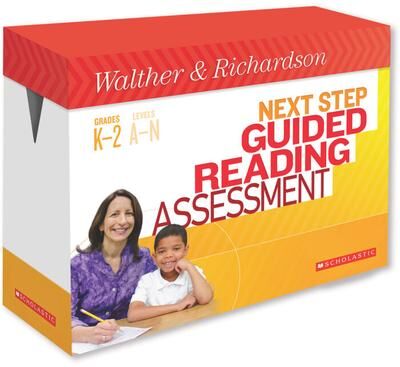
Scholastic Next Step Guided Reading Assessment, K-2Developed by leading literacy experts Jan Richardson, Ph.D., and Maria Walther, Ed.D., Next Step Guided Reading Assessment uses Richardson's proven Assess-Decide-Guide teaching system to pinpoint students' reading level and target instructional next...489,00 $*Shipping: 0,00 $Secure redirect to the provider
-
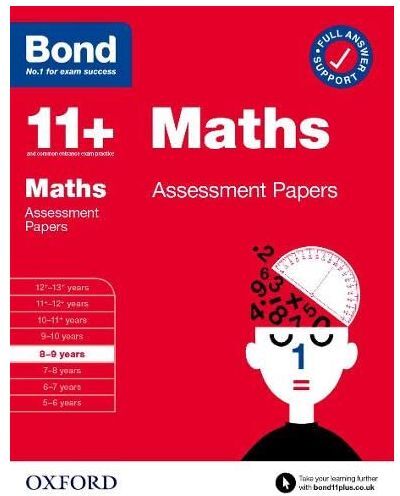
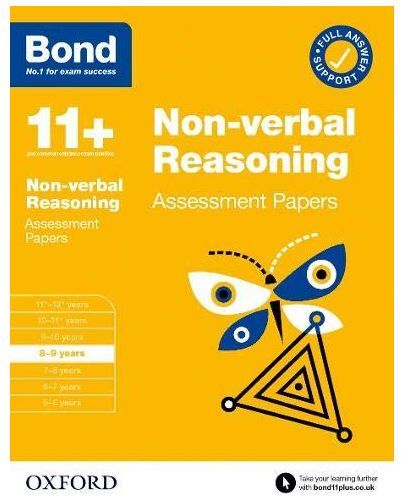
OXFORD UNIVERSITY PRESS Bond 11+ Maths English Verbal Non-Verbal Reasoning Assessment Practice 6-7 years 4 Books Set (Bond Assessment Papers)Bond 11+ Maths English Verbal Non-Verbal Reasoning Assessment Practice 6-7 years 4 Books Set (Bond Assessment Papers) Year 2 Developed and written by experienced tutors, Bond 11+ Assessment Practice Books offer exam-style practice questions, perfect for preparing for the GL 11+ exam and other selective school tests, with full answer explanations in a removable booklet. Bond 11+ English Assessment Practice Age 6-7: Covers all of the core 11+ English exam topics including comprehension, spelling, sentences, punctuation, and grammar Bond 11+ Maths Assessment Practice Age 6-7: Covers a wide variety of maths topics including place value, multiplication and division, fractions, shapes, measurement, and diagrams Bond 11+ Non-verbal Reasoning Assessment Practice Age 6-7: Covers a wide variety of non-verbal reasoning topics including shapes, angles and rotation, similarities, sequences, reflections, and grids Bond 11+ Verbal Reasoning Assessment Practice Age 6-7: Covers a wide variety of verbal reasoning topics including word meanings, word connections, missing letters, patterns and sequences, anagrams, and codes15,99 £*Shipping: 2,99 £Secure redirect to the provider
-
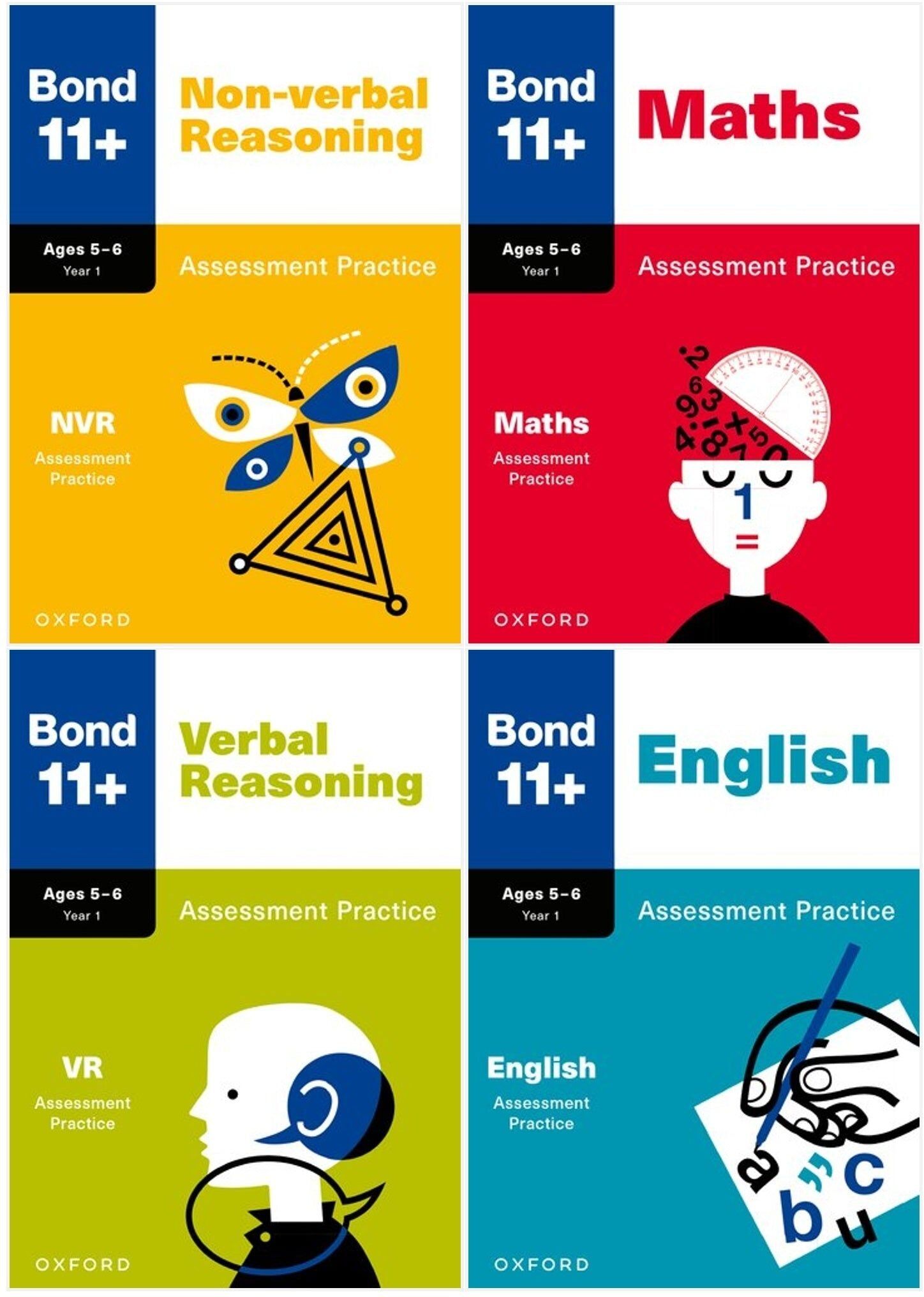
OXFORD UNIVERSITY PRESS Bond 11+ Maths English Verbal Non-Verbal Reasoning Assessment Practice 5-6 years 4 Books Set (Bond Assessment Papers)Bond 11+ English; Maths; Non-verbal Reasoning; Verbal Reasoning Assessment Practice 4 Books Set (Age 5-6) The pack includes the following 4 books (Bond 11 Plus books) Bond 11+ Maths Assessment Practice Ages 5-6 Bond Maths Assessment Practice for 5-6 years are topic-based practice questions that set the foundation for success in SATs; common entrance or 11+ exams. They have been written to cover the core National Curriculum skills and cover the question types used in 11+ exams; building the skills and confidence for exam success. Bond 11+ English Assessment Practice Ages 5-6 Bond English Assessment Practice for 5-6 years are topic-based practice questions that set the foundation for success in SATs; common entrance or 11+ exams. They have been written to cover the core National Curriculum skills and cover the question types used in 11+ exams; building the skills and confidence for exam success Bond 11+ Verbal Reasoning Assessment Practice Ages 5-6 Bond Verbal Reasoning Assessment Practice for 5-6 years introduces children to verbal reasoning problem-solving skills; encouraging thinking skills and providing early preparation for Common Entrance and 11+ exams. Bond 11+ Non-Verbal Reasoning Assessment Practice Ages 5-6 Bond Non-verbal Reasoning Assessment Practice for 5-6 years introduces children to non-verbal reasoning problem-solving skills; encouraging thinking skills and providing early preparation for Common Entrance and 11+ exams.14,40 £*Shipping: 2,99 £Secure redirect to the provider

-
What will mobility of the future look like?
The mobility of the future is expected to be more sustainable, connected, and autonomous. Electric vehicles will become more prevalent, reducing emissions and reliance on fossil fuels. Transportation systems will be interconnected, allowing for seamless travel between different modes of transportation. Autonomous vehicles will also play a significant role, offering safer and more efficient transportation options. Overall, the future of mobility will prioritize sustainability, efficiency, and convenience. **
-
How do electric motors work in electric mobility with cars?
Electric motors in electric cars work by converting electrical energy from the battery into mechanical energy to drive the vehicle. When the driver accelerates, the electric motor receives power from the battery and generates torque to propel the car forward. This process is more efficient than traditional internal combustion engines, as electric motors have fewer moving parts and can deliver power instantly. Additionally, electric motors can also act as generators during braking, converting kinetic energy back into electrical energy to recharge the battery, a process known as regenerative braking. **
-
What are some brainstorming ideas for electric mobility?
Some brainstorming ideas for electric mobility could include developing more efficient battery technology to increase the range of electric vehicles, creating a network of fast-charging stations to alleviate range anxiety, implementing incentives for consumers to switch to electric vehicles such as tax breaks or rebates, and investing in infrastructure improvements to support the widespread adoption of electric vehicles. Additionally, exploring the use of renewable energy sources to power electric vehicles and integrating smart technology to optimize charging times and energy usage could also be beneficial brainstorming ideas for electric mobility. **
-
What is the progress of electric mobility internationally?
Electric mobility has been making significant progress internationally, with many countries and cities implementing policies and incentives to promote the adoption of electric vehicles. Several major automakers have also committed to transitioning to electric vehicle production, and the infrastructure for electric vehicle charging is expanding rapidly. Additionally, there has been a growing focus on developing more sustainable and efficient battery technology to further support the growth of electric mobility. Overall, the international progress of electric mobility is promising, with increasing awareness and investment in this cleaner and more sustainable mode of transportation. **

How will the mobility of the future look like?
The mobility of the future is likely to be characterized by a shift towards electric and autonomous vehicles. Electric vehicles will become more prevalent as the technology improves and the infrastructure for charging stations expands. Autonomous vehicles will also play a significant role, offering a more efficient and safer mode of transportation. Additionally, there will be a greater emphasis on shared mobility services, reducing the need for individual car ownership and promoting a more sustainable and flexible transportation system. Overall, the future of mobility will be more connected, efficient, and environmentally friendly. **
How will the mobility of the future be influenced?
The mobility of the future will be influenced by advancements in technology such as autonomous vehicles, electric cars, and smart transportation systems. These innovations will lead to increased efficiency, safety, and sustainability in transportation. Additionally, changing consumer preferences towards shared mobility services and a shift towards urbanization will also impact the way people move around in the future. Overall, the mobility of the future is likely to be more interconnected, environmentally friendly, and convenient. **
Top-Angebote
Products related to Assessment:
-
Scholastic Next Step Guided Reading Assessment, K-2Developed by leading literacy experts Jan Richardson, Ph.D., and Maria Walther, Ed.D., Next Step Guided Reading Assessment uses Richardson's proven Assess-Decide-Guide teaching system to pinpoint students' reading level and target instructional next...489,00 $*Shipping: 0,00 $Secure redirect to the provider
-
How will future mobility be influenced?
Future mobility will be influenced by advancements in technology, such as the development of autonomous vehicles and electric cars. These innovations will lead to more efficient and sustainable transportation options. Additionally, the integration of smart city infrastructure and the rise of shared mobility services will also play a significant role in shaping the future of mobility. Overall, future mobility will be characterized by increased connectivity, reduced environmental impact, and a shift towards more convenient and flexible transportation solutions. **
-
Will bicycles be the mobility of the future?
Bicycles have the potential to be a significant part of the future of mobility. With increasing concerns about environmental sustainability and the need for more efficient and healthy modes of transportation, bicycles offer a promising solution. Cities around the world are investing in bike infrastructure and promoting cycling as a viable means of transportation. Additionally, the rise of electric bicycles and advancements in bike-sharing programs are making cycling more accessible and convenient. While bicycles may not be the sole solution to future mobility, they are likely to play a significant role in creating more sustainable and efficient transportation systems. **
-
What will mobility of the future look like?
The mobility of the future is expected to be more sustainable, connected, and autonomous. Electric vehicles will become more prevalent, reducing emissions and reliance on fossil fuels. Transportation systems will be interconnected, allowing for seamless travel between different modes of transportation. Autonomous vehicles will also play a significant role, offering safer and more efficient transportation options. Overall, the future of mobility will prioritize sustainability, efficiency, and convenience. **
-
How do electric motors work in electric mobility with cars?
Electric motors in electric cars work by converting electrical energy from the battery into mechanical energy to drive the vehicle. When the driver accelerates, the electric motor receives power from the battery and generates torque to propel the car forward. This process is more efficient than traditional internal combustion engines, as electric motors have fewer moving parts and can deliver power instantly. Additionally, electric motors can also act as generators during braking, converting kinetic energy back into electrical energy to recharge the battery, a process known as regenerative braking. **
Similar search terms for Assessment
-
OXFORD UNIVERSITY PRESS Bond 11+ Maths English Verbal Non-Verbal Reasoning Assessment Practice 6-7 years 4 Books Set (Bond Assessment Papers)Bond 11+ Maths English Verbal Non-Verbal Reasoning Assessment Practice 6-7 years 4 Books Set (Bond Assessment Papers) Year 2 Developed and written by experienced tutors, Bond 11+ Assessment Practice Books offer exam-style practice questions, perfect for preparing for the GL 11+ exam and other selective school tests, with full answer explanations in a removable booklet. Bond 11+ English Assessment Practice Age 6-7: Covers all of the core 11+ English exam topics including comprehension, spelling, sentences, punctuation, and grammar Bond 11+ Maths Assessment Practice Age 6-7: Covers a wide variety of maths topics including place value, multiplication and division, fractions, shapes, measurement, and diagrams Bond 11+ Non-verbal Reasoning Assessment Practice Age 6-7: Covers a wide variety of non-verbal reasoning topics including shapes, angles and rotation, similarities, sequences, reflections, and grids Bond 11+ Verbal Reasoning Assessment Practice Age 6-7: Covers a wide variety of verbal reasoning topics including word meanings, word connections, missing letters, patterns and sequences, anagrams, and codes15,99 £*Shipping: 2,99 £Secure redirect to the provider
-
OXFORD UNIVERSITY PRESS Bond 11+ Maths English Verbal Non-Verbal Reasoning Assessment Practice 5-6 years 4 Books Set (Bond Assessment Papers)Bond 11+ English; Maths; Non-verbal Reasoning; Verbal Reasoning Assessment Practice 4 Books Set (Age 5-6) The pack includes the following 4 books (Bond 11 Plus books) Bond 11+ Maths Assessment Practice Ages 5-6 Bond Maths Assessment Practice for 5-6 years are topic-based practice questions that set the foundation for success in SATs; common entrance or 11+ exams. They have been written to cover the core National Curriculum skills and cover the question types used in 11+ exams; building the skills and confidence for exam success. Bond 11+ English Assessment Practice Ages 5-6 Bond English Assessment Practice for 5-6 years are topic-based practice questions that set the foundation for success in SATs; common entrance or 11+ exams. They have been written to cover the core National Curriculum skills and cover the question types used in 11+ exams; building the skills and confidence for exam success Bond 11+ Verbal Reasoning Assessment Practice Ages 5-6 Bond Verbal Reasoning Assessment Practice for 5-6 years introduces children to verbal reasoning problem-solving skills; encouraging thinking skills and providing early preparation for Common Entrance and 11+ exams. Bond 11+ Non-Verbal Reasoning Assessment Practice Ages 5-6 Bond Non-verbal Reasoning Assessment Practice for 5-6 years introduces children to non-verbal reasoning problem-solving skills; encouraging thinking skills and providing early preparation for Common Entrance and 11+ exams.14,40 £*Shipping: 2,99 £Secure redirect to the provider
-
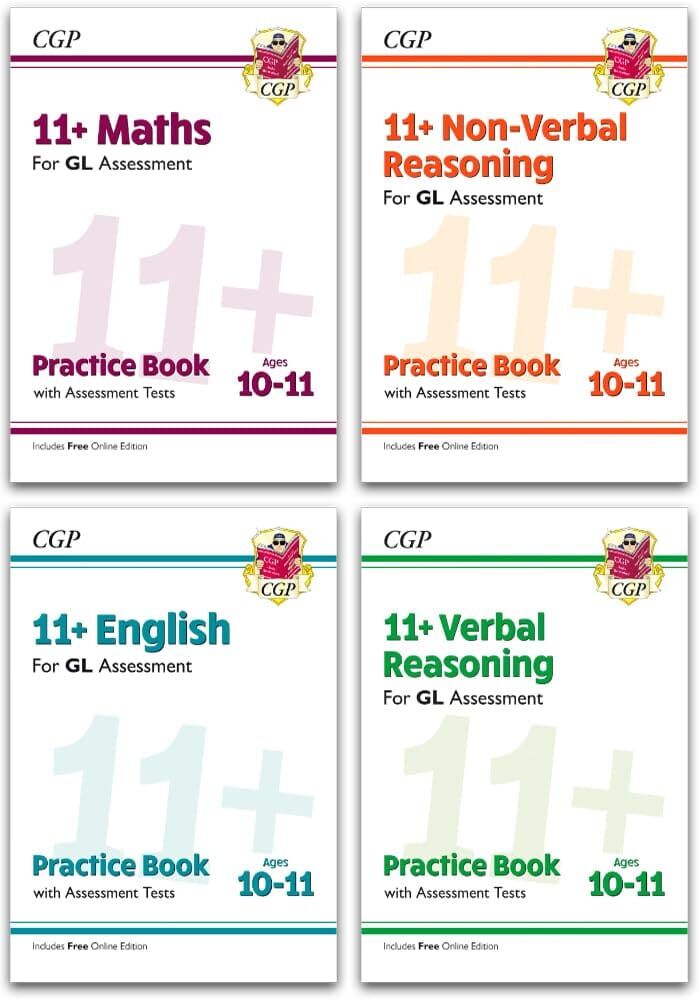
CGP 11+ Practice Book & Assessment Tests Bundle (for GL Assessment) 4 Books Set - Ages 10-11 - Paperback (Includes Free Online Edition) Coordination Group Publications Ltd (CGP)Titles in this Set: 1. 11+ GL Verbal Reasoning Practice Book & Assessment Tests 2. 11+ GL Non-Verbal Reasoning Practice Book & Assessment Tests 3. 11+ GL Maths Practice Book & Assessment Tests 4. 11+ GL English Practice Book & Assessment Tests Description: 11+ GL Verbal Reasoning Practice Book & Assessment Tests With its huge range of Verbal Reasoning questions for ages 10-11, this book is an excellent way to prepare for the 11+ test and other selective entrance exams. The first section of the book focuses on one topic at a time to help children gain understanding and confidence. This is followed by six realistic Assessment Tests to improve their speed and accuracy across a wide range of questions. And if they get stuck or go wrong, the detailed answers at the back of the book make it easy to understand the reasoning behind the questions. 11+ GL Non-Verbal Reasoning Practice Book & Assessment Tests Looking for extra-challenging practice for 11+ Verbal Reasoning? This book is packed with a wide range of practice questions set at the level of the trickiest 11+ questions — and beyond! The first part of the book focuses on one question type at a time to help children master the key skills needed for the GL test, including Comprehension, with a wide range of extra-tricky practice questions set at the very top level of the 11+ and beyond, so they’ll be ready for anything that gets thrown at them. The second part contains a selection of realistic Assessment Tests, with the later tests being even trickier than the real 11+. And if they get stuck, detailed answers make it easy to understand the reasoning behind the questions. 11+ GL Maths Practice Book & Assessment Tests Perfect for children aged 10-11 preparing for 11+ Maths and other selective entrance exams, this book contains a huge range of questions at the level of the final tests. The first section of the book focuses on one topic at a time to help children gain understanding and confidence. This is followed by four realistic Assessment Tests to improve their speed and accuracy across a wide range of questions. And if they get stuck or go wrong, the detailed answers at the back of the book make it easy to understand the reasoning behind the questions. 11+ GL English Practice Book & Assessment Tests Ideal for preparation in the run-up to the 11+ English test and other selective entrance exams, this book contains a huge range of questions at the level of the final tests. The first section of the book focuses on one topic at a time to help children gain understanding and confidence. This is followed by six realistic Assessment Tests to improve their speed and accuracy across a wide range of questions. And if they get stuck or go wrong, the detailed answers at the back of the book make it easy to understand the reasoning behind the questions.28,99 £*Shipping: 2,99 £Secure redirect to the provider
-
What are some brainstorming ideas for electric mobility?
Some brainstorming ideas for electric mobility could include developing more efficient battery technology to increase the range of electric vehicles, creating a network of fast-charging stations to alleviate range anxiety, implementing incentives for consumers to switch to electric vehicles such as tax breaks or rebates, and investing in infrastructure improvements to support the widespread adoption of electric vehicles. Additionally, exploring the use of renewable energy sources to power electric vehicles and integrating smart technology to optimize charging times and energy usage could also be beneficial brainstorming ideas for electric mobility. **
-
What is the progress of electric mobility internationally?
Electric mobility has been making significant progress internationally, with many countries and cities implementing policies and incentives to promote the adoption of electric vehicles. Several major automakers have also committed to transitioning to electric vehicle production, and the infrastructure for electric vehicle charging is expanding rapidly. Additionally, there has been a growing focus on developing more sustainable and efficient battery technology to further support the growth of electric mobility. Overall, the international progress of electric mobility is promising, with increasing awareness and investment in this cleaner and more sustainable mode of transportation. **
-
How will the mobility of the future look like?
The mobility of the future is likely to be characterized by a shift towards electric and autonomous vehicles. Electric vehicles will become more prevalent as the technology improves and the infrastructure for charging stations expands. Autonomous vehicles will also play a significant role, offering a more efficient and safer mode of transportation. Additionally, there will be a greater emphasis on shared mobility services, reducing the need for individual car ownership and promoting a more sustainable and flexible transportation system. Overall, the future of mobility will be more connected, efficient, and environmentally friendly. **
-
How will the mobility of the future be influenced?
The mobility of the future will be influenced by advancements in technology such as autonomous vehicles, electric cars, and smart transportation systems. These innovations will lead to increased efficiency, safety, and sustainability in transportation. Additionally, changing consumer preferences towards shared mobility services and a shift towards urbanization will also impact the way people move around in the future. Overall, the mobility of the future is likely to be more interconnected, environmentally friendly, and convenient. **
* All prices are inclusive of VAT and, if applicable, plus shipping costs. The offer information is based on the details provided by the respective shop and is updated through automated processes. Real-time updates do not occur, so deviations can occur in individual cases. ** Note: Parts of this content were created by AI.